

When framing starts, most people are watching walls go up and rooms take shape.
But there’s a small detail at the very bottom of those walls that matters more than it looks.
It’s called a sill gasket.

What a Sill Gasket Actually Is
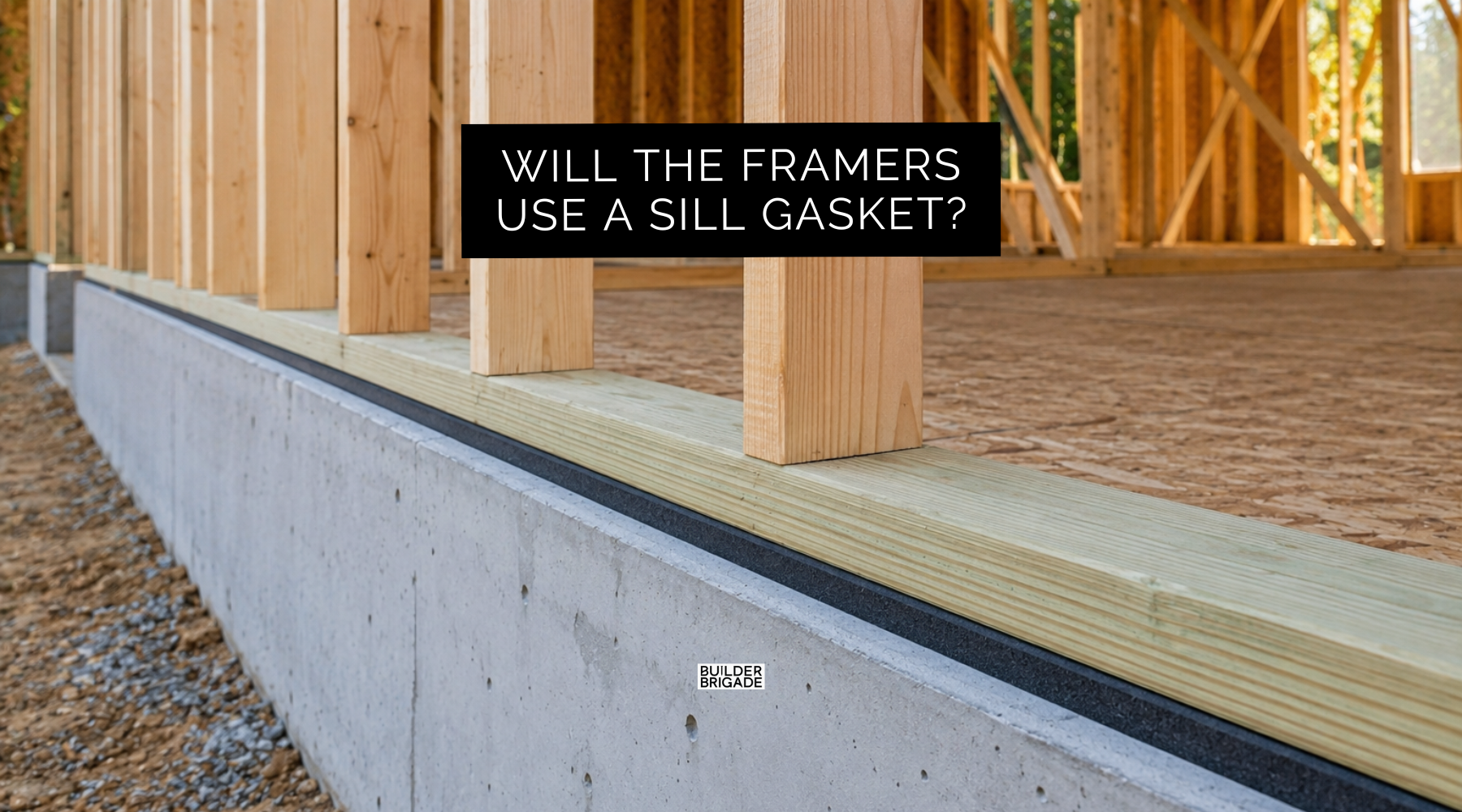
A sill gasket is a thin strip of foam installed between the concrete foundation and the bottom plate of your exterior walls.
It sits right where wood meets concrete.
You won’t see it once framing is done.

It Seals Air Leaks at the Source
Concrete isn’t perfectly smooth.
There are tiny gaps, voids, and imperfections where air can pass through. Without a gasket, outside air can pass through the base of your walls.
That means less efficiency. The gasket fills those gaps and creates a tighter seal from the start.

It Blocks Moisture Before It Becomes a Problem
Concrete holds moisture.
Without a barrier, that moisture can slowly wick into the wood framing sitting on top of it.
The sill gasket acts as a capillary break, stopping that moisture from ever reaching the wood.
It’s a simple and cheap layer of protection.
It Helps Keep Bugs Out
The joint between your foundation and framing is one of the easiest entry points for pests.
Ants and other insects will find that gap and use it as a path into your home.
The gasket helps close that gap off and removes one of the most common “entry points” around the house.

This Only Happens Once
This is only installed where exterior walls meet the foundation.
And it only happens once, right at the start of framing.
Most framers include it by default, but in the rush of a build, small details like this can get missed.
It takes seconds to check and impossible to add later.
Catch It While You Can
This is exactly the kind of detail that gets overlooked because it’s hidden early.
The Ultimate Home Building Checklist helps you know what to look for at each phase of the build, so you don’t miss things that matter once the house is closed up.
Because the biggest problems usually start with the smallest details.