

Most homeowners don’t think about this one until after install. That’s too late.
Tank Toilets Are the Default
They are the default for a reason. They work anywhere.
They require standard plumbing and pressure. There’s no weird install requirements. They’re quiet and the refill sound is more of a soft whoosh, not a pressurized blast. No one gets woken up by a 2AM flush.

They’re cheap and easy to replace. Any plumber can service them, and if something breaks, you don’t need a specialist.
But the tank takes up space. It sticks out from the wall and makes a tight bathroom feel even smaller. Flush power is also lower since it relies on gravity, not pressure.
If you want reliable, simple, and budget-friendly then this is it.
Tankless Toilets Hit Harder
These don’t store water, they flush with line pressure.
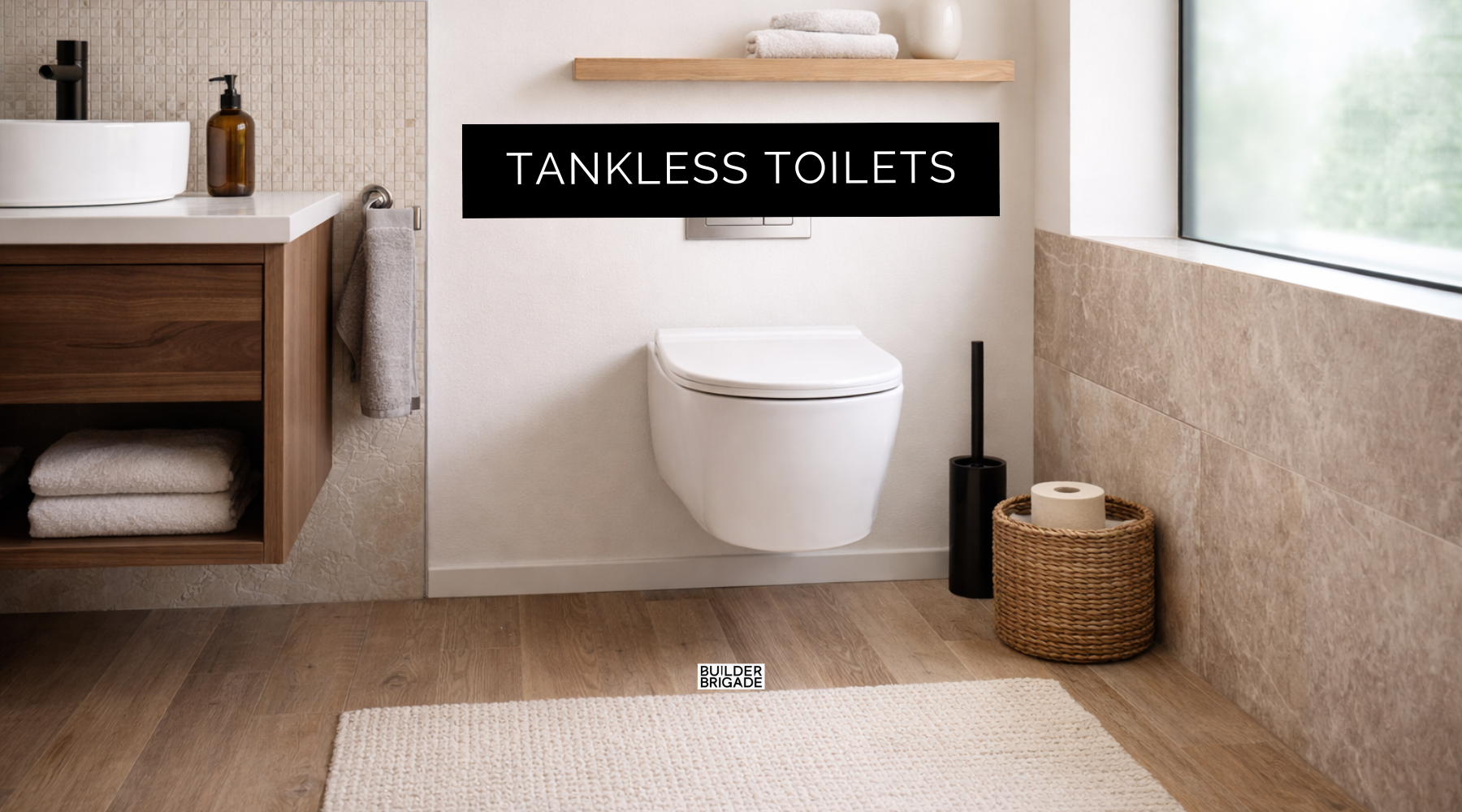
That means the flush is fast, aggressive, and efficient. And the unit is compact, especially if it’s wall-mounted. Visually, they win.
No tank means a cleaner silhouette. Pair it with a floating install, and you’ve got a hotel-grade look.

But the price tag is higher. The units cost more, and installation takes more planning. You’ll need a plumber who knows what they’re doing, and your home’s water pressure has to be high enough to make it work.
They’re louder, too. The flush isn’t quiet but rather sharp and fast. That may not matter during the day, but it’s noticeable at night.
If your build is modern, space-conscious, or designed for a clean, minimal look then this option is where you go.
Check Your Water Pressure Before You Choose
This is non-negotiable. Tankless toilets need solid water pressure to do their job. Without it, you’ll lose performance and could end up with a system that underperforms from day one.
Have your plumber test the pressure early, not after fixtures are installed.
Don’t Wing This One
Toilet placement is just one line item. But it’s part of a bigger chain of decisions.
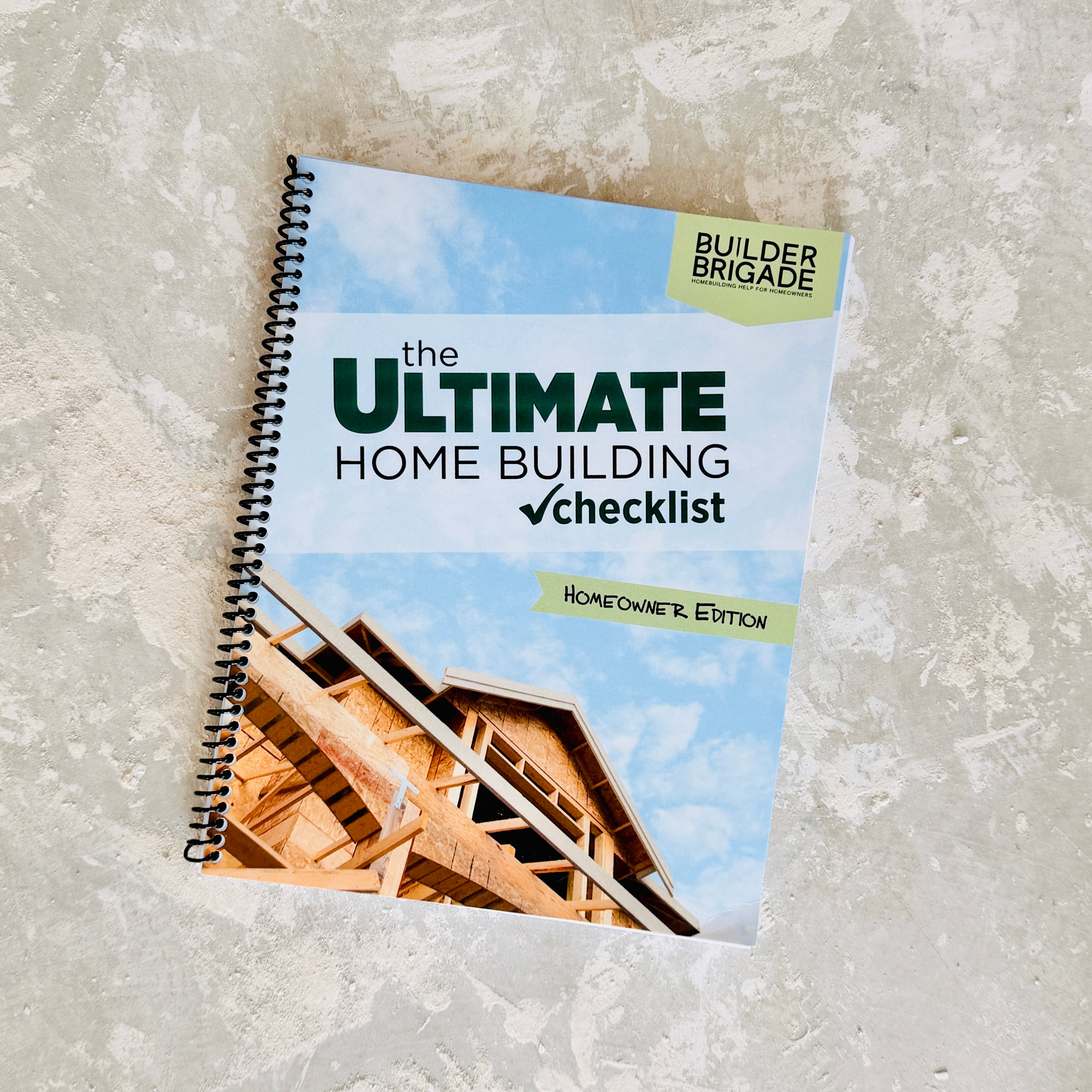
The Ultimate Home Building Checklist maps all of it out by build phase. So you never miss the small stuff that turns into big regrets later.
Use it now, before drywall goes up, and build smarter the first time.