


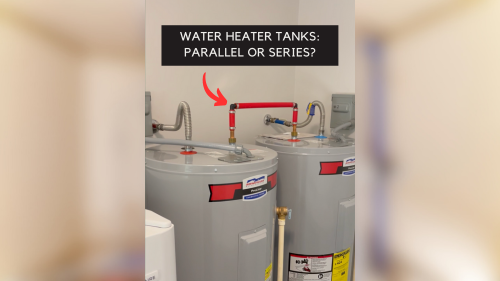
BLUF: Parallel vs. Series Water Heater Connections
Parallel Connection:
- Instantly provides a larger volume of hot water.
- Maintains supply even if one heater fails.
- Ideal for high demand; more reliable.
- Pipes need to be equal length
- Cons: Requires more space, can be less energy-efficient for low usage.

Series Connection:
- Second tank boosts temperature; efficient for moderate demand.
- Can save energy if sized and configured properly.
- Cons: Possible temperature drop, risk of temporary hot water shortage if first tank cools.

Conclusion: Parallel connections generally offer more hot water on demand, making them suitable for homes with high usage needs. Series can be more energy-efficient for moderate use but might not always meet high demand effectively.
Full Article
When setting up hot water systems in a home, you have the option of connecting multiple water heaters in parallel or in series. Each configuration has its advantages and considerations.
Tanks Connected in Series:
In a series setup, water flows through one tank and then into the next. This can be more efficient if the first tank does most of the heating and the second merely boosts the water temperature to the desired level.
Pros:
- If the demand is moderate, this setup can ensure a steady supply of hot water with the second tank serving as a backup, providing hot water for longer periods.
- Can be more energy-efficient under certain conditions because the first tank preheats the water for the second, reducing the energy needed to reach the desired temperature.
Cons:
- The water temperature might decrease as it moves through the system, especially if the tanks are not sized or configured correctly.
- If the first tank runs out of hot water, the second tank has to heat cold water, which might lead to a temporary shortage of hot water.
Tanks Connected in Parallel:
In a parallel setup, both tanks are fed from the main supply and connect to a common hot water line that feeds the house. This means both tanks heat the water at the same time and supply it to the home. Note: The pipes need to be equal length from the tanks to ensure the water is distributed evenly between the tanks

Pros:
- Offers a larger volume of hot water available instantly because both tanks work together to supply hot water.
- If one heater fails, the other can still provide hot water, making the system more reliable.
- Better for homes with high hot water demand because the system can supply large amounts of hot water simultaneously.
Cons:
- Requires more space for installation since you need to accommodate multiple tanks side by side.
- Can be less energy-efficient than series connections if not all the stored hot water is used regularly, as both tanks need to maintain their temperature.
Which Provides More Hot Water?
Parallel connections typically provide more hot water faster to meet peak demand times in a household because both water heaters work together to supply hot water to the system. This setup is usually preferred in homes with high hot water demand. However, the best choice depends on your specific hot water needs, space, and energy efficiency considerations.