

Some of the most important parts of your house end up underground. Here’s what to know about each one.
1. Buried Propane Tank
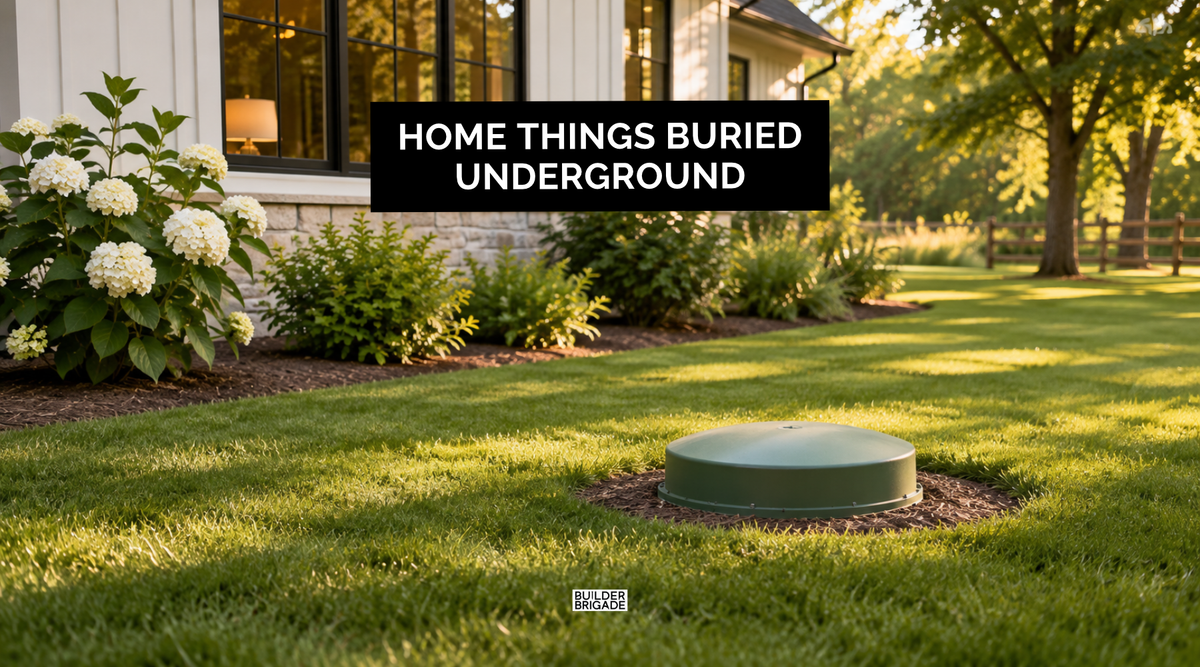
If your new house uses propane, you may have the option of burying the tank instead of having a large one sitting above ground.
Personally, I like the look of a buried tank because you don't have a giant propane tank sitting in your yard.
But there are a few things I'd figure out before choosing this option.
First, burying a propane tank typically costs more than installing one above ground. You need a tank approved for underground installation, excavation, proper backfill, and corrosion protection.
I'd also think about where the tank is going.
Even though the tank is buried, the access dome and fill connection still need to remain accessible. You don't want to put it somewhere that makes it difficult for the propane company to refill or service it.

2. Septic Tank Lids
If you're building on a property with a septic system, this is one upgrade I'd absolutely consider.
Have septic tank risers installed so the access lids are at ground level.
Without risers, your septic tank lids may be buried beneath several inches of dirt.
That means every time the tank needs to be inspected or pumped, someone may have to dig up part of your yard just to find and open the lids.
Risers bring the access points up to the surface, making maintenance much easier.
I'd ask your septic installer to include risers with secure, properly rated lids before the landscaping goes in.

3. Main Water Shut-Off
This might be the most important one to locate before moving in.
If you ever have a plumbing leak, you need to know how to shut off the water to your house.
And depending on where you're building, the main shut-off might not be where you expect.
In colder climates, the main house shut-off is commonly located inside, where it's protected from freezing.
But in warmer areas, like Georgia, you may also have an outdoor shut-off in a ground-level utility box near the house or street.
I'd ask your builder or plumber to show you exactly where the main house shut-off is located and how to operate it.
Don't assume the valve at the street is the one you're supposed to use. That may be a utility-owned shut-off that requires a special tool or permission to operate.
If your accessible shut-off is inside a ground box, make sure you know how to open it and keep the appropriate tool somewhere easy to find.
The last thing you want during a plumbing emergency is to be searching through the yard trying to figure out how to turn the water off.

Know What's Underground Before You Move In
These aren't the most exciting parts of building a house, but they're definitely worth paying attention to.
I'd rather know where my utilities are, how to access them, and who's responsible for maintaining them before something goes wrong.
And if you're building a new home, these are exactly the kinds of details I cover in my Ultimate Home Building Checklist. It helps you think through the little decisions that are easy to miss while you're focused on everything happening above ground.