

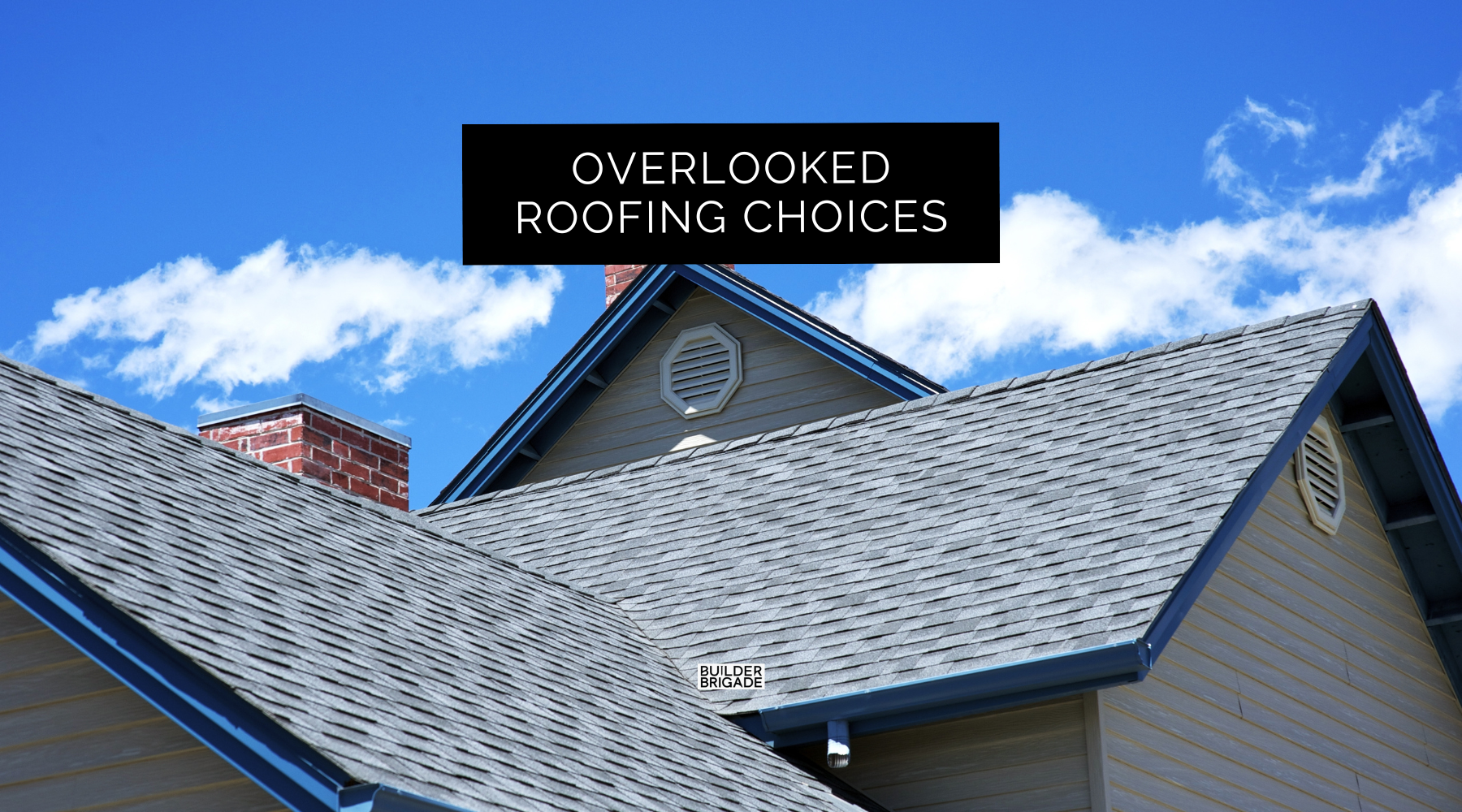
These are four important roofing details worth understanding before your slab is poured or framing begins.
1. Roof Pitch
Your roof pitch is how steep your roof is. A 6/12 pitch (which rises 6 inches for every 12 inches of run) is about as steep as you'd want to safely walk. That's the most common in Georgia and for good reason! Anything steeper can feel sketchy, especially if you’re planning on doing your own maintenance or hanging Christmas lights.

2. Sheathing Thickness
Sheathing is the layer of wood that sits underneath your shingles. It’s what your entire roofing system is built on. Most roofers will default to 1/2-inch plywood or OSB. But upgrading to 5/8-inch sheathing adds more strength and durability, especially helpful in areas with heavy rain, snow, or strong wind.
That extra 1/8 inch may not sound like much, but it adds noticeable strength and reduces flexing over time.
3. Sheathing Type
There are three main types of roof sheathing: OSB, plywood, and Zip System. OSB is the cheapest and most commonly used. Plywood is stronger and holds up better under moisture, but it costs a bit more. The top-of-the-line option is the Zip System, which combines a durable panel with a built-in water barrier. The seams are sealed with tape to create a tight, waterproof seal even before your shingles go on.
If your budget allows, Zip is the upgrade most pros would choose for their own homes. It’s worth it in terms of strength, moisture control, and long-term performance.

4. Underlayment
Underlayment is your first line of defense against leaks. It's installed directly on top of the sheathing and under the shingles. Traditional tar paper is cheap but thin. Upgrading to a synthetic or premium underlayment gives you extra time and protection if your shingles are delayed or water sneaks in during big storms.

Don’t Skip The Details
Want to make sure you don’t miss upgrades like this in your home build? The Ultimate Home Building Checklist is your go-to resource. It’s packed with detailed tips for every phase of the build so you don’t have to learn the hard way. If you're building soon, get the checklist before your plans are locked in.