

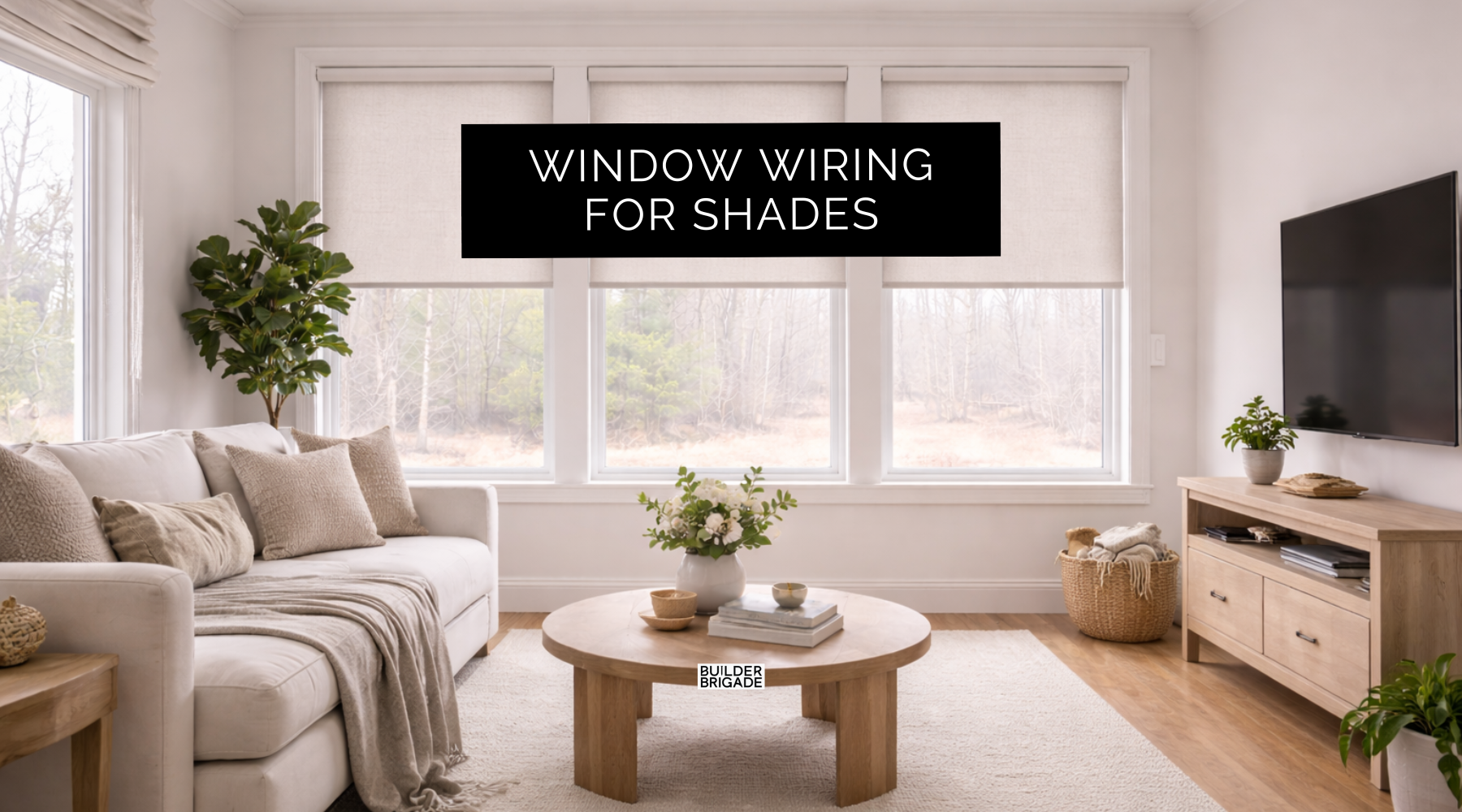
If automated shades are even a possibility for your new home build, wiring your windows needs to happen before drywall.
Here are your options.
16/2 Low-Voltage Wire
This is the safest and most flexible option if you haven’t chosen a shade brand yet.
16/2 low-voltage wire is compatible with a wide range of motorized shade systems, which means you’re not locking yourself into one manufacturer too early. Running this to every window gives you the ability to choose your shades later without being limited.
It’s also relatively inexpensive to install during framing, especially compared to retrofitting after the house is finished. If you’re unsure, this is the default move most homeowners should make.

Lutron Wire
If you’re planning to use Lutron shades, you need to wire specifically for them.
Lutron uses a proprietary multi-conductor cable, which means standard low-voltage wiring won’t work. This is where a lot of homeowners get caught. They decide on Lutron later and realize they don’t have the right wiring in place.
Lutron is one of the most reliable and high-end systems out there, but it requires planning early.
CAT5 Ethernet (PoE)
Some newer shade systems use Power over Ethernet, which allows both power and data to run through a single cable. It’s your best choice for future-proofing your home!
This setup is often used in more advanced smart homes where everything is integrated and controlled centrally. It can offer cleaner installs and more control options, especially if you’re already running CAT5 or CAT6 throughout the house.
It’s not as common for standard builds, but if you’re going deeper into smart home automation, it’s worth considering.

The Best Move
Pick your shade brand early and run exactly what it requires.
That’s always the cleanest and most reliable setup.
If you’re undecided, run 16/2 low-voltage wire to every window so you don’t get stuck using battery-powered or fully wireless shades later. Those work, but they come with maintenance and limitations most homeowners don’t want long term.
Hardwired shades are quieter, more reliable, and feel like a true built-in feature instead of an add-on.
Plan It Before It’s Too Late
This is one of those decisions that gets missed because it happens early.
The Ultimate Home Building Checklist walks you through decisions like this in the right order, so you don’t miss simple upgrades that are easy during construction and expensive later.