

Are you building a new home and planning to add a deck? You might think using strong composite boards means your deck will last a long time and you're partly right! Composite decking is great because it doesn’t rot, fade, or bend like wood does.
But there’s one big problem many people forget: the wood frame under the deck.
Composite Boards Aren’t the Whole Story
Many people think that using composite decking means they won’t have to worry about damage or rot. It’s true that composite boards don’t rot, fade, or bend like regular wood. But every deck, even a composite one, needs a frame underneath to support it. That frame is usually made of pressure-treated wood.
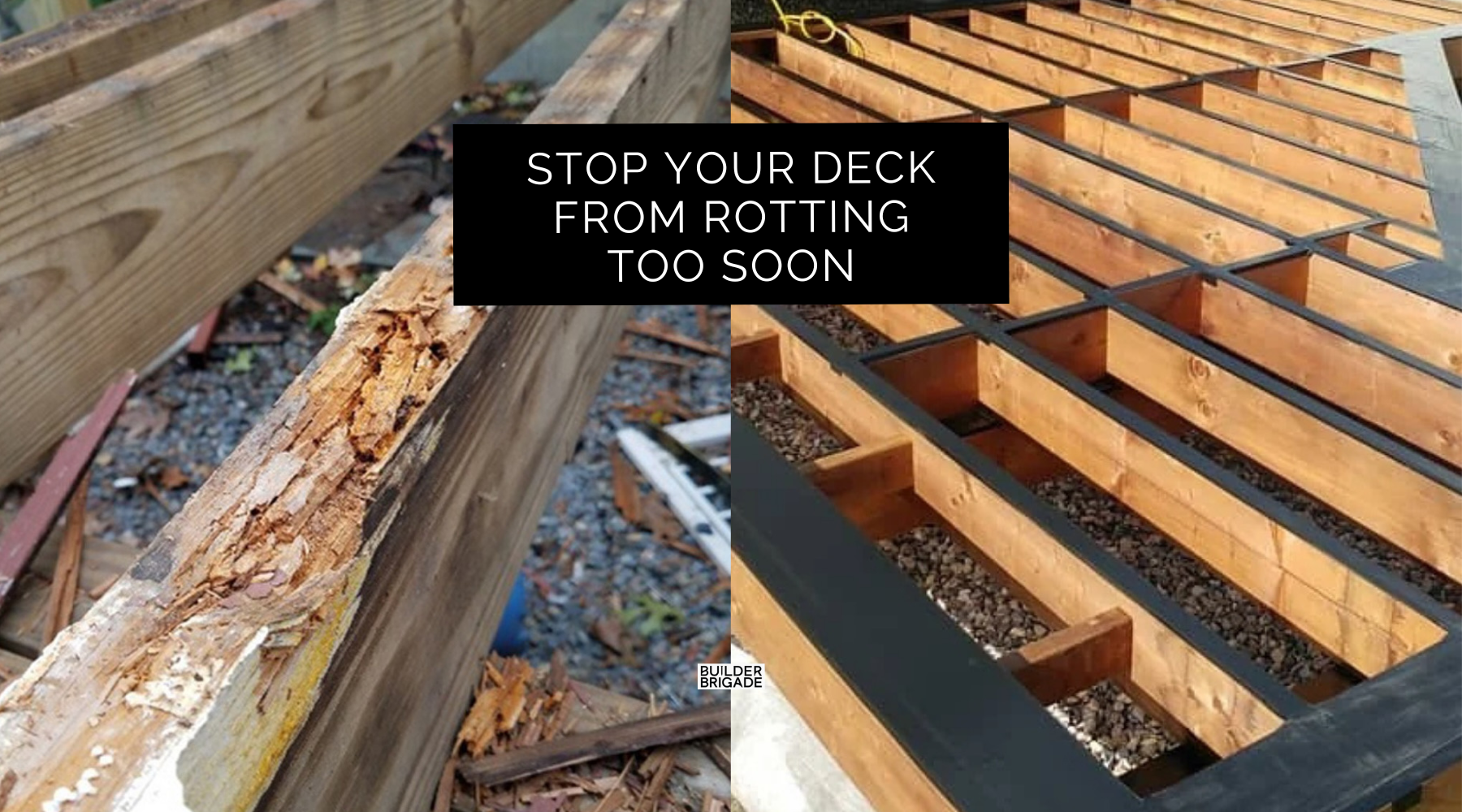
This wood is treated to last longer, but it can still get damaged by water. Rainwater often sits on the top edges of the joists and over time, that water soaks in. Screws and fasteners can also let water into the wood. The sun dries the outside, but the inside stays wet. That causes the wood to rot on the inside, even if it looks okay on the outside.
Eventually, the wood becomes weak. Your deck might still look nice on top, but the frame holding it up is falling apart. By the time you notice something is wrong, the damage can be expensive to fix.

A Simple Upgrade That Changes Everything
The good news is that there’s a simple way to protect your deck frame before the boards go on. You can use joist tape or a liquid version that you brush or roll on. Both of these products make a waterproof layer on top of the wood joists.
This barrier stops water from getting into the wood and keeps water from sitting around the screws. Even though you won’t see it after your deck is finished, it helps your deck last much longer. It also lowers the chances of mold, rot, and big repairs later on. For a small cost, you can protect one of the most important (and most expensive) parts of your deck.
If you want a recommendation, here’s a link to a deck tape I trust: https://geni.us/DeckTapePoly

A Budget-Friendly Tip
If you’re building your own deck or trying to keep costs down, here’s something to know. The liquid version of joist protection usually costs half as much as tape. You can brush or roll it on like paint, and it works especially well if your frame has lots of cuts or small spaces.
No matter which one you pick, tape or liquid, both will protect your joists from water. That means your deck will stay strong and safe for a much longer time.

Ask Your Builder Before It’s Too Late
Joist protection is something that’s easy to miss when you’re planning a new deck. It doesn’t change how the deck looks, so it might not come up when you’re designing it. But it’s still very important. Once the deck boards are installed, it’s too late to add protection without taking the whole thing apart.
So if you’re building a new home and adding a deck, make sure to ask your builder if they use joist tape or liquid deck protection. If they don’t, ask if you can add it in or give it to them yourself. This small step can save you a lot of money and trouble later and help your deck last for many years.
If you found this tip helpful, grab The Ultimate Home Building Checklist for more advice like this. It’s full of helpful steps to make sure you don’t miss anything while building your dream home.