


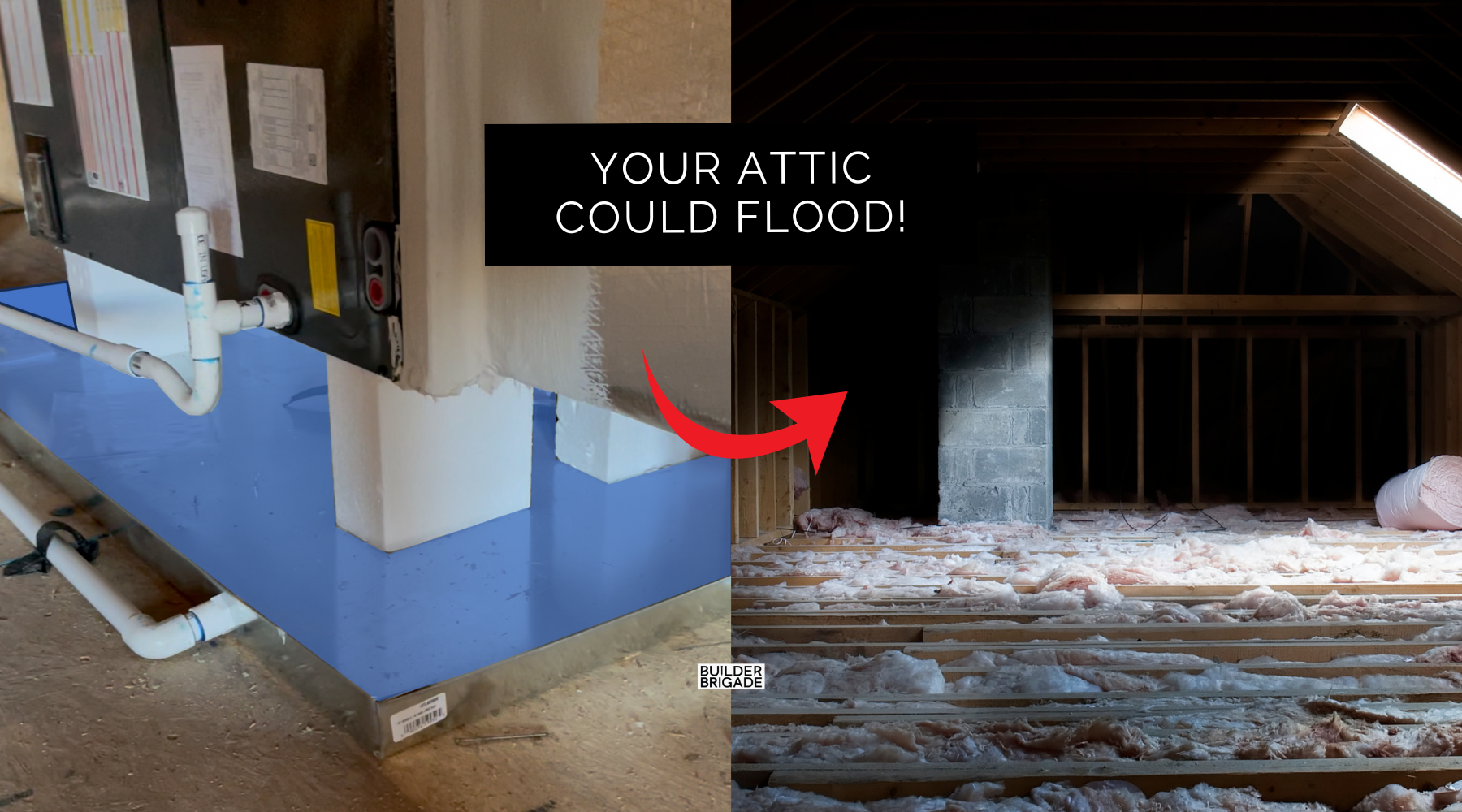
An attic leak can be a very expensive, stressful mess. One of the biggest culprits? Your HVAC system’s overflow pan. Here’s how to prevent it:
Why Does Your HVAC Drain Pan Fill With Water?
The most common reason for this is a clogged drain line. Your HVAC system produces condensation, and that water has to go somewhere. Normally, it drains through a primary line. But when that line gets blocked, the water has nowhere to go except into the emergency drain pan. If the pan overflows, you’re looking at water damage and potentially a huge repair bill.

A Simple Solution
There’s an easy way to stop an overflow disaster with a float switch. This little switch turns off your HVAC unit if the pan starts filling with water. That way, instead of your attic turning into an indoor swimming pool, your system just shuts off. It’s cheap insurance for peace of mind. If your house doesn’t have one, it’s worth considering. Here’s a link to the switch: https://geni.us/HVACpanSwitch. Definitely hire a professional to install it, but trust me, it’s worth it.

Preventing Clogged Drain Lines
There’s this miracle product called Prev Clog that Mikey Pipes talks about. It’s basically a small rope that you feed into the drain line, and it prevents buildup for something like 20 years. Sounds pretty amazing, right? This isn’t required for new home builds, but honestly, it seems like a no-brainer if you want to avoid costly water damage.
Aside from that, basic maintenance goes a long way. Pouring a cup of vinegar or bleach down your drain line every few months can help keep it clear. Checking that your drain pan isn’t rusted or cracked is another good habit. And if you want to be extra cautious, have an HVAC pro inspect your system annually. A little prevention now saves you from a major headache later.
I used to scoff at hiring an A/C guy to come out a couple times a year for maintenance but now I realize it’s worth its weight in gold! They ensure these drain lines don’t clog and catch signs of premature failure so you can get ahead of any HVAC issues.
Regular Maintenance Tips
-
Check and Clean the Drain Lines: Pour a cup of vinegar or bleach down the drain line every few months to prevent algae and debris buildup.
-
Inspect the Drain Pan: Look for rust, cracks, or standing water in the pan. If you see damage, replace it ASAP.
-
Ensure the Drain Line is Clear Outside: If your system drains outside, make sure the exit point is unobstructed.
-
Schedule an Annual HVAC Inspection: A professional can catch slow clogs or failing pumps before they become major problems.

As a homeowner, you probably didn’t expect to be thinking about HVAC drain lines, but here we are. If you want more home building tips just like this, get The Ultimate Home Building Checklist to avoid headaches and home disasters later down the line.