

Here are four decisions you’re going to have to make before you coat your garage floor.
1. Coat the Garage Stem Wall
You know that little concrete wall running around the perimeter of your garage? That's the stem wall.
Your installer may ask if you want to pay extra to have it coated along with the floor.
I'd absolutely do it.
If you leave the stem wall as raw concrete, you'll have a beautiful finished garage floor with an unfinished concrete border running around the outside.
Personally, I think coating the entire thing looks much better.

2. Decide Whether to Coat the Step
If you have a step leading from your house into the garage, you'll need to decide if you want that coated too.
We had one step coming out of our main house, and I decided to coat it so everything matched.
I loved how it looked, but there's something worth considering. When you're looking down from above, the step can blend into the garage floor because they're the exact same color and finish.
That could become a trip hazard if someone doesn't notice the change in elevation.
I never had an issue with it during the years we lived there, but if you're concerned about visibility, I'd consider a contrasting edge or another way to make the step easier to see.

3. Decide Where the Coating Stops at the Garage Door
This is another little detail you may not have thought about.
Where your garage door closes, there's usually a small section of concrete that extends out beyond the door.
Your installer may ask if you want the coating to continue all the way to the outside edge.
If you say yes, you'll see a small strip of the finished coating from outside when the garage door is closed.
I went ahead and coated mine because I thought it looked better than leaving that little section as raw concrete.
It's mostly a personal preference, but I'd ask the installer to show you exactly where the coating will stop before making the decision.

4. Ask for a Double Coat
This is the one your installer might NOT bring up, so I'd specifically ask about it.
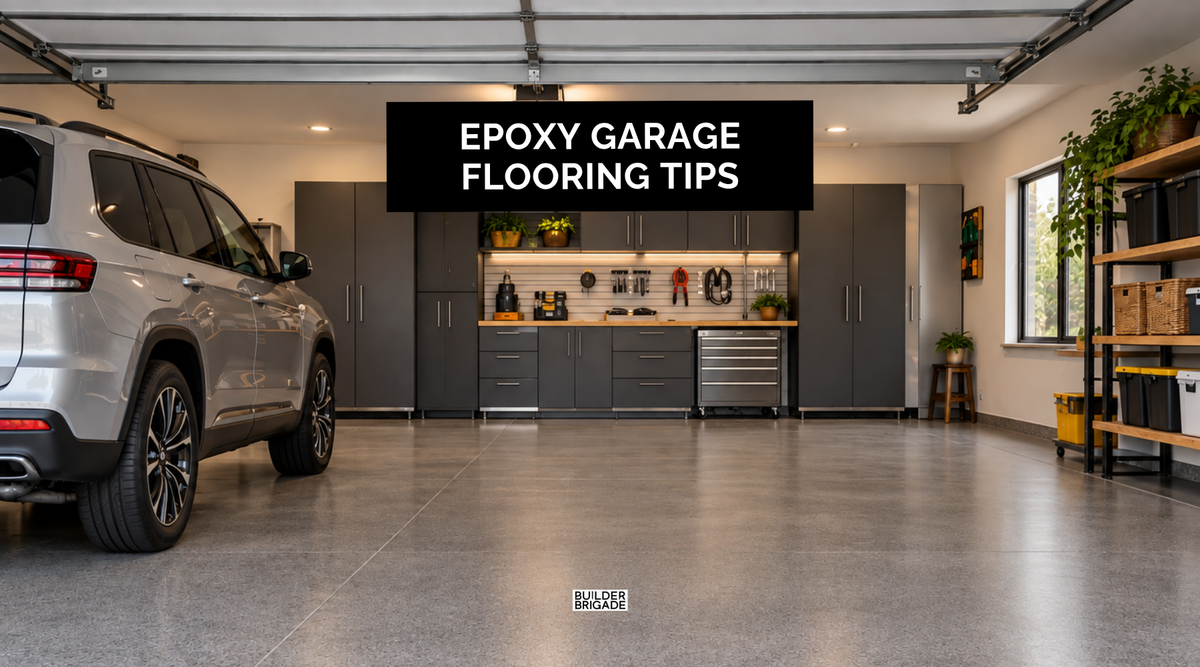
With a decorative flake garage floor, the installer broadcasts those little colored flakes into the coating and then applies a clear topcoat.
The flakes create texture, which is great in some ways, but they can also leave the finished surface feeling a little rough.
I was planning to use my garage as a gym and wanted to be able to mop the floor. The problem with a rougher flake finish is that your mop can catch on all those little edges.
So I asked for an additional clear coat.
That extra coat helped create a smoother surface that was much easier to mop and clean. I went with the double coat, and after years of living with it, I'd absolutely do it again.
There is one trade-off, though.
A smoother finish can also be more slippery.
 Know About Polyaspartic
You'll hear these garage floors referred to as epoxy floors all the time, but many installers are now offering polyaspartic coating systems instead.
Polyaspartic topcoats generally offer better UV resistance than traditional epoxy, which helps reduce yellowing in areas exposed to sunlight.
They can also offer excellent resistance to everyday wear and hot-tire pickup when the entire system is properly installed.
Another benefit is that some polyaspartic systems cure considerably faster than traditional epoxy.
Make These Decisions Before the Installer Arrives
None of these are huge decisions, but I wouldn't want to make them while someone is standing in my garage waiting for an answer.
I'd get the stem wall, step, threshold, and number of clear coats included in the quote ahead of time.
That way, you know exactly what you're getting and what the finished garage will look like.
And if you're building a new home, these are the kinds of details I cover throughout my Ultimate Home Building Checklist. There are hundreds of little decisions you'll need to make during construction, and I'd rather you know about them before the trades show up than wish you'd done something differently after moving in.