

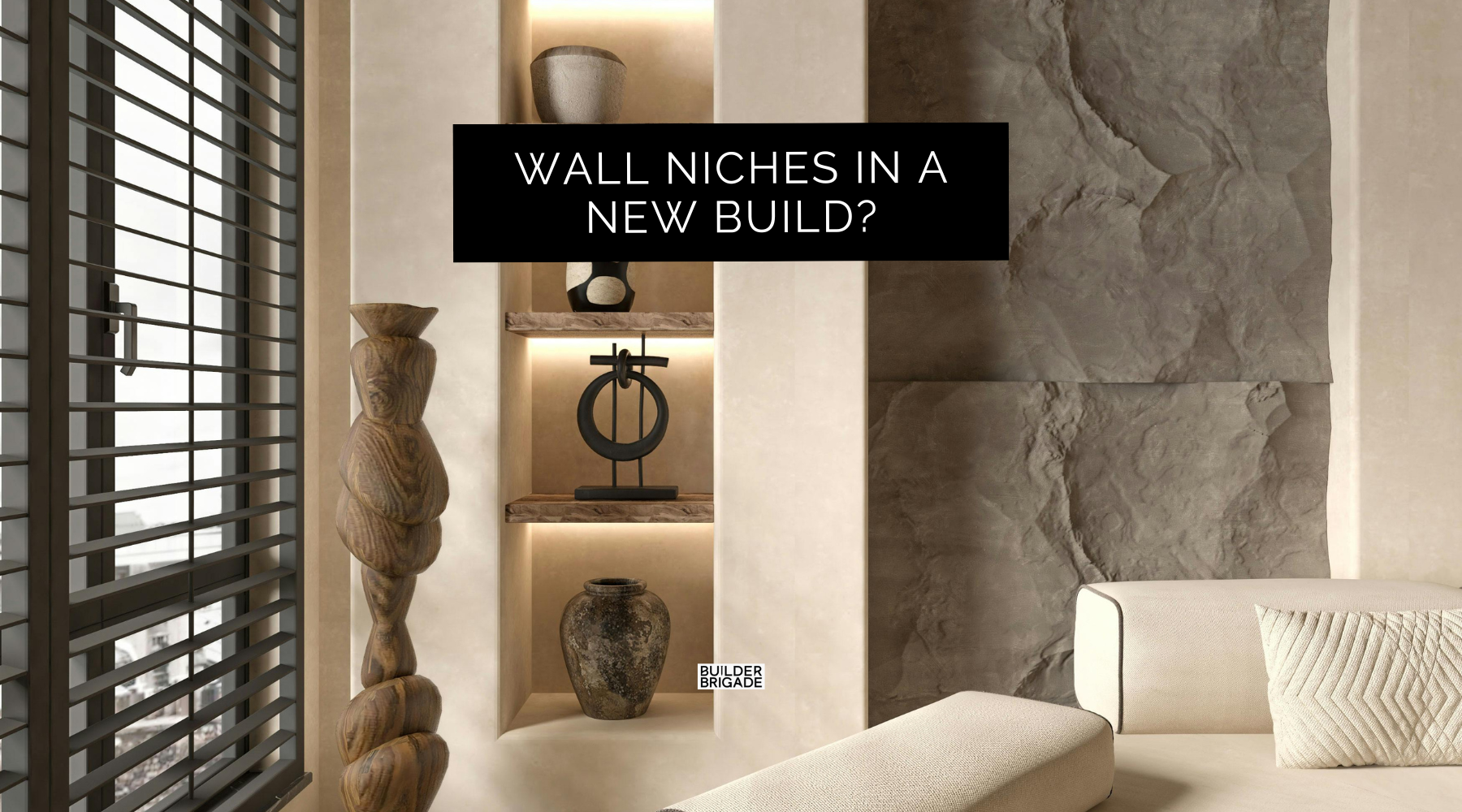
Wall niches can add interest and function to nearly any room in a new build. Done right, they look intentional and custom. Done poorly or without a plan and they’re just hollow rectangles in the wall that collect dust!
Where You’ll See Them Most
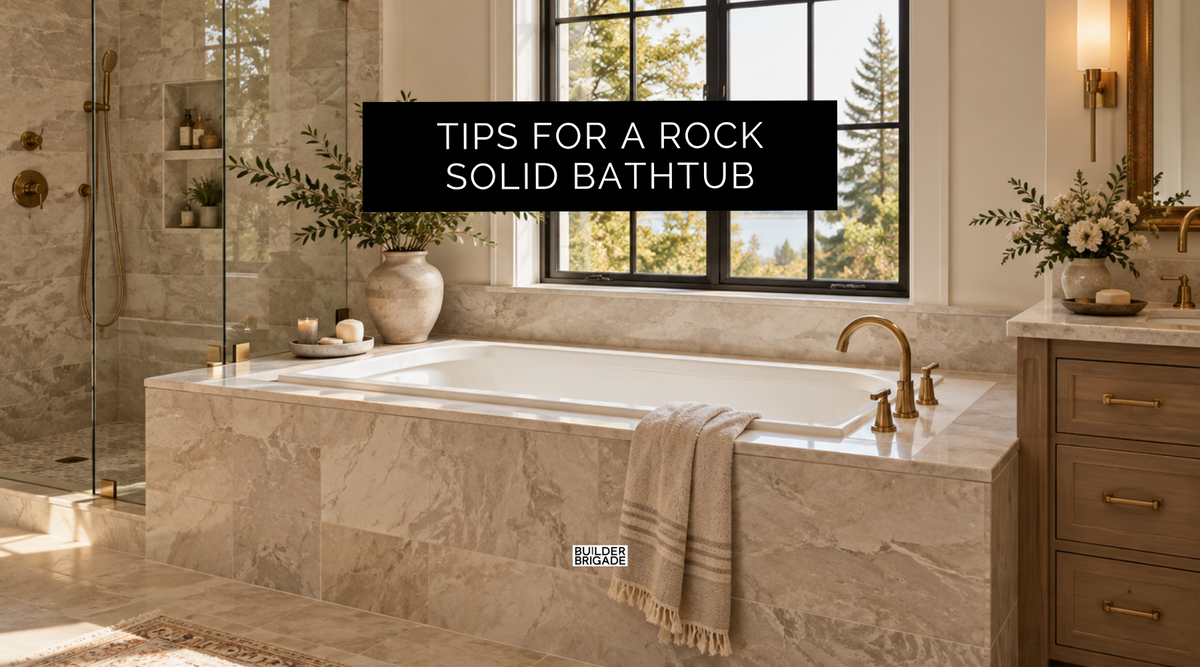
The most common use for wall niches is in the shower. A niche in the shower keeps shampoo, soap, and razors off the floor or corner ledges and makes the whole space feel more streamlined. Just make sure the bottom is slightly angled so water doesn’t pool and create a mess.
In hallways and entryways, wall niches can break up long, flat expanses of drywall and create space for decorative touches without cluttering the floor. In an entryway, a small niche might be used for setting down keys or mail, or just as a small visual moment in a tight space.

Wood Trimmed Wall Niche via Centsational Style
Living rooms often use niches on either side of a fireplace or TV wall to display books, artwork, or lighting features. In rooms with large flat walls, they can add some rhythm and dimension without having to hang anything.
In bedrooms, some homeowners choose to install a niche above or behind the bed in place of a headboard or to act as a built-in nightstand. It’s a way to work in storage or soft lighting without adding furniture.
You might also find wall niches in other areas of a bathroom as a smart way to store toilet paper, candles, or hand towels within reach.
Why You’d Want Them
Wall niches are especially practical in small or narrow spaces since they don’t extend into the room. They offer space-saving storage or display without the need for shelving or extra furniture. They’re also highly customizable. You can finish a niche with tile, paint, trim, or built-in lighting to match the surrounding space and tie into your overall design. When thoughtfully planned, a niche looks like part of the architecture not just an afterthought.

Bathroom Wall Niche via Thea Velic
They also provide a clean, modern look. Because they’re recessed, they don’t add visual clutter and can actually make a space feel more open and intentional.
Things to Think About Before You Build
If you’re going to include a wall niche, it needs to be framed early and ideally during the rough framing phase of your build. After drywall is installed, your options become limited and any changes will be more expensive.
If your design style leans classic or traditional, consider framing the niche with an arch to add a bit of character and softness to the space. This is another detail that must be planned and framed early.

Styled Wall Niche via Divine Decor Finds
If you want your niche to be lit you’ll need to run wiring before the walls are closed up. Fishing wire through drywall later is usually not worth the hassle and expense.
The most important thing to think about is how you plan to use it. Without a clear purpose or plan, a niche can quickly become a random, awkward cutout that gathers dust. Whether it’s storage, lighting, or display, be intentional.
Looking For More?
Want more details like this to guide your build from start to finish? Grab the Ultimate Home Building Checklist and stay one step ahead through every phase of construction.