

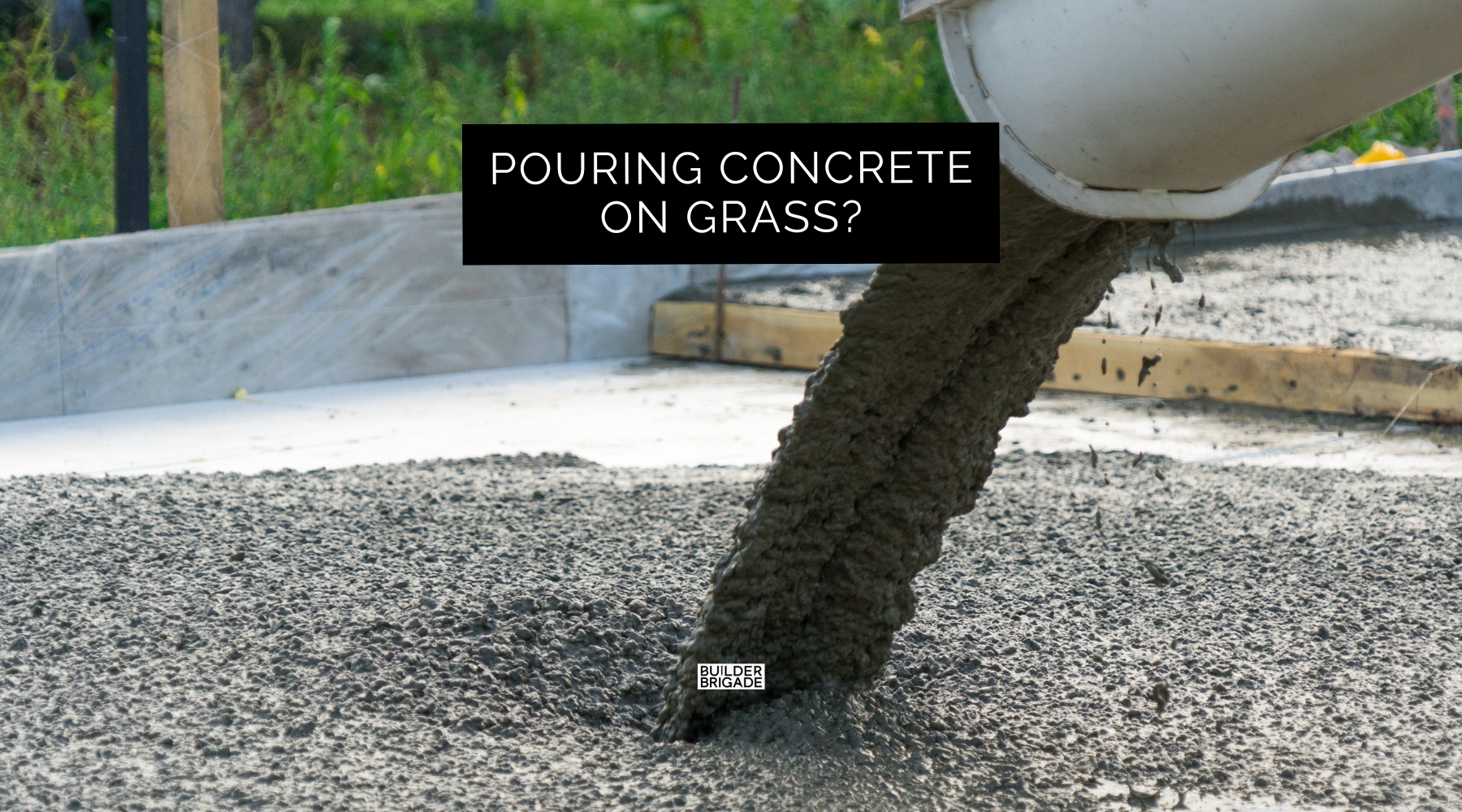
It might seem faster to pour concrete right over your lawn, but it’s one of the easiest ways to guarantee long-term problems. Grass might seem flat and harmless, but it doesn’t stay that way under concrete.
When concrete is poured directly on grass, the ground is still soft, the grass dies and decomposes. That leaves behind tiny voids under the surface. Over time, water collects in those empty pockets. Then when winter hits and the water freezes, the expansion leads to cracking and shifting in your slab.
What You Should Do Instead
Before any concrete is poured, the grass and topsoil need to be removed. After that, add a base layer of compacted gravel or screenings. This forms a firm, even foundation that drains properly and won’t shift under weight or water pressure. A vibrating plate compactor is ideal to make sure that base is solid before the concrete goes down.
The base prep might take more time up front, but it’s what keeps your slab from sinking, cracking, or becoming a water trap later. Think driveways, patios, walkways, or anything you walk or drive on regularly needs a good foundation to stay level and strong.

Do You Need a Vapor Barrier?
For interior slabs, like a garage or basement floor, a plastic vapor barrier is important. It blocks ground moisture from seeping up through the concrete, which can mess with flooring, create condensation, or even lead to mold.
But for exterior concrete like sidewalks and driveways? You can skip the vapor barrier. Those outdoor slabs are exposed to rain from above anyway, so moisture from below isn’t the main issue. What does matter outdoors is having a well-compacted base with proper grading and drainage.
Plan Smart Before You Pour
Concrete is expensive and permanent. Once it’s down, fixing mistakes is a lot harder. Prepping your base correctly is one of the simplest ways to get it right the first time. Don’t rush the job by pouring straight onto grass just to save a day of work. A little extra effort now means a slab that lasts for years without shifting, cracking, or becoming a muddy headache.

Your Smartest Building Resource
Before you pour a slab or pick out finishes, the Ultimate Home Building Checklist helps you stay ahead of costly mistakes. It’s organized by every phase of construction and packed with practical ideas, upgrade suggestions, and reminders. We’ve even added images and descriptions to every item so you don’t have to guess.